Quick answer
Agricultural drones are legal to use in India under the Drone Rules, 2021. The drone must have a type certificate and be registered on DGCA's Digital Sky platform, the pilot needs a Remote Pilot Certificate from a DGCA-authorised training organisation, and flights must respect the airspace map and the SOP for pesticide spraying.
Key takeaways
- Most farm spraying happens in green zones, but always check the Digital Sky airspace map.
- Only pesticides approved for drone application should be sprayed by drone.
- Farmers can hire a service, rent a drone or buy one — the right choice depends on area.
- Schemes for FPOs, CHCs and women's SHGs have helped spread drones across states.
Drone rules for agriculture in India — a simple summary
The Drone Rules (opens in a new window), 2021 replaced the older, stricter framework and made it far easier to own and fly drones. For agricultural use, four requirements matter most.
Type certificate and UIN
Every drone flown commercially must be of a certified type, and each unit gets a Unique Identification Number on Digital Sky. Ask the seller for the type certificate number before you pay.
Remote Pilot Certificate (RPC)
The person flying the drone needs an RPC, issued through a DGCA-authorised Remote Pilot Training Organisation (RPTO) after training and a test. Agriculture-focused courses also cover spraying operations.
Airspace zones
The Digital Sky airspace map divides India into green, yellow and red zones. Green zones generally allow flights within the permitted height without prior permission; yellow and red zones need approvals. Fields near airports, borders or sensitive installations may fall in restricted zones.
SOP for pesticide and nutrient spraying
The Ministry of Agriculture has issued standard operating procedures for spraying pesticides and nutrients by drone, and only products with approval for drone application should be used. The SOP covers buffer zones, weather, PPE and record keeping.
How agricultural drones are helping Indian farmers
- Spraying flooded paddy, tall sugarcane and dense cotton without walking through the crop
- Reducing the farmer's direct contact with chemicals, since the pilot stays at the field edge
- Using much less water per acre than conventional knapsack spraying
- Covering fields quickly when a pest or disease outbreak needs a timely response
- Creating field maps and crop health maps for better planning
Types of agricultural drones used in India
Not every drone sold in India is meant for farming. Agricultural UAVs fall into three broad groups, and many service providers use more than one type.
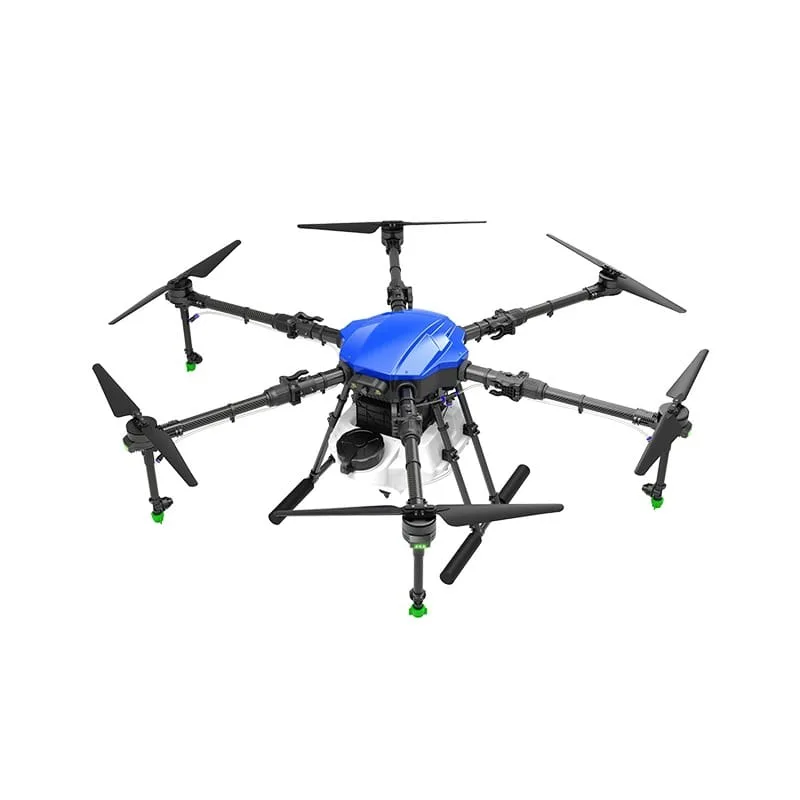
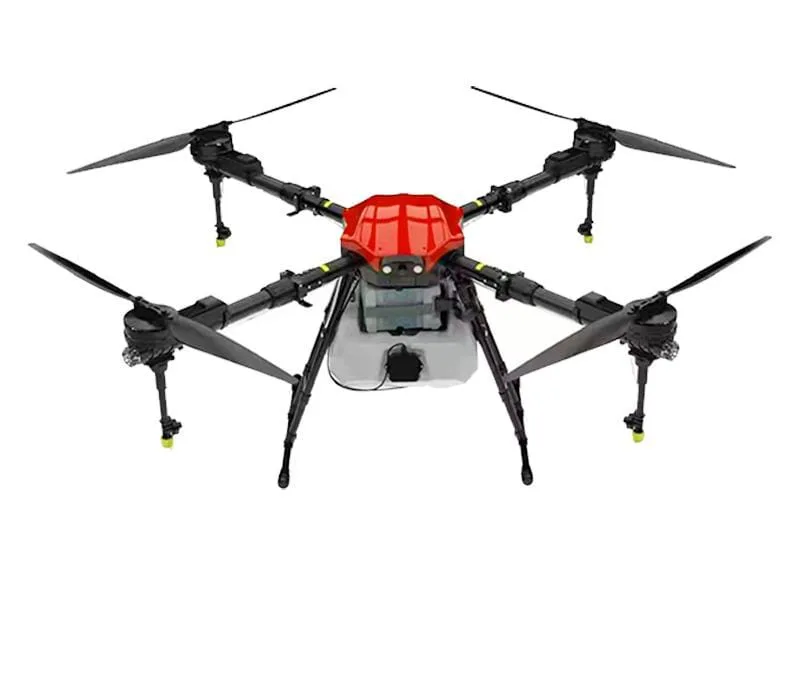
- Spraying drones: a tank, pump and nozzles (or a spreader attachment) for pesticides, liquid nutrients and in some cases granules or seeds
- Mapping drones: an RGB camera flown in a grid to stitch an accurate orthomosaic map of the field
- Monitoring drones: multispectral or thermal cameras that reveal crop stress before it is visible to the eye
Three paths for farmers and agri-entrepreneurs
| Option | Best for | What you pay for |
|---|---|---|
| Hire a drone spraying service | Individual farmers, small and medium plots | Only the area sprayed |
| Rent a drone | FPOs and large farms for a season | Rental period, often with an operator |
| Buy a drone | CHCs, FPOs, cooperatives, service entrepreneurs | Drone, batteries, pilot, upkeep |
Where drone adoption is heading
Government initiatives such as Kisan Drones and drone support for women's self-help groups have pushed demonstrations into villages. As more operators get certified and more products receive approval for drone use, the service is becoming available in more districts every season.
The biggest gaps today are trained local pilots, reliable after-sales service and clear information for farmers. That is why we focus on honest guidance — what a drone can and cannot do — before anyone spends money.
Frequently asked questions
Are agricultural drones legal in India?
Yes. Under the Drone Rules, 2021, drones can be used for agriculture when the drone is certified and registered, the pilot holds a Remote Pilot Certificate, and the flight follows airspace rules and the spraying SOP.
Does a farmer need a licence to use a drone?
A farmer who hires a spraying service does not need any licence — the operator handles compliance. Anyone who flies the drone themselves needs a Remote Pilot Certificate from a DGCA-authorised RPTO.
Which crops are sprayed by drone in India?
Paddy, wheat, cotton, sugarcane, soybean, maize, pulses, vegetables, grapes and orchard crops, among others — always with products approved for drone application on that crop.
How do I register an agriculture drone?
Registration is done on DGCA's Digital Sky platform, which issues a Unique Identification Number for a drone of a certified type. Sellers usually help buyers with the paperwork.
Can I fly a drone anywhere over my own field?
Not automatically. Check the Digital Sky airspace map first. Fields in yellow or red zones need permission, and you must keep safe distances from people, houses and sensitive sites.
Is there government support for agricultural drones?
Yes, there have been schemes for institutions, FPOs, Custom Hiring Centres and women's SHGs. Eligibility and amounts change, so check the latest guidelines with official sources.
How do I start using drones on my farm?
Start with a drone spraying service for one crop, see the results, then decide whether renting or buying makes sense for your area. Call 8282802150 to discuss your field.
About this guide
- Written by
- Kisan Drone team, Noida. We work with farmers, FPOs and drone operators on spraying, buying and training questions.
- Reviewed by
- Mohit Singh, Drone Operator — 10 years of drone-spraying experience
- Last updated
How we write
We do not publish invented prices, subsidy amounts, yields or reviews. Rules and schemes are checked against official sources, and anything that depends on your crop, product or location is marked as such. Found an error? Email enquiry@kisandrone.co.in.