Quick answer
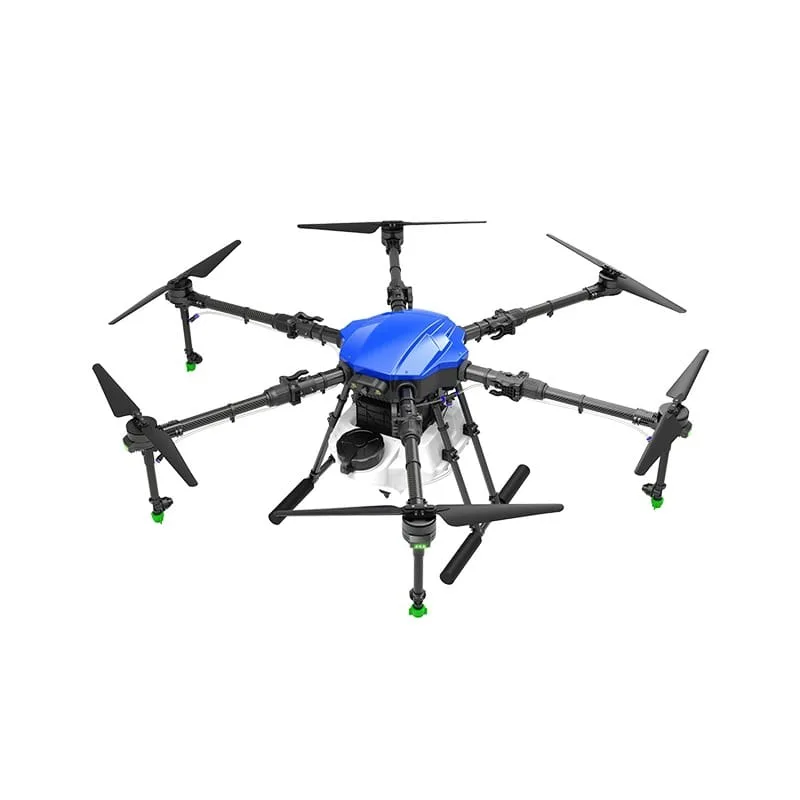
The best drone for spraying crops has an accurate spray system (consistent flow control and suitable nozzles), stable flight with terrain following, reliable positioning (RTK if you need precision), enough battery capacity for continuous work, a simple planning app and good local support. These features matter more than the biggest tank or the highest advertised acres per hour.
Key takeaways
- Flow control that adjusts to speed keeps the dose even across the field.
- Terrain following is essential on uneven land and orchards.
- RTK is useful for precise, repeatable routes but not essential for every farm.
- A bigger tank is not always better — weight, batteries and transport matter.
1. Spray system and flow control
The spray system decides whether the dose is even across the field. Good drones adjust flow rate automatically as speed changes, so turns and slow-downs do not cause over-application. Ask how flow is measured and controlled, and whether the system alerts you to blockages or an empty tank.
2. Nozzle type and droplet size
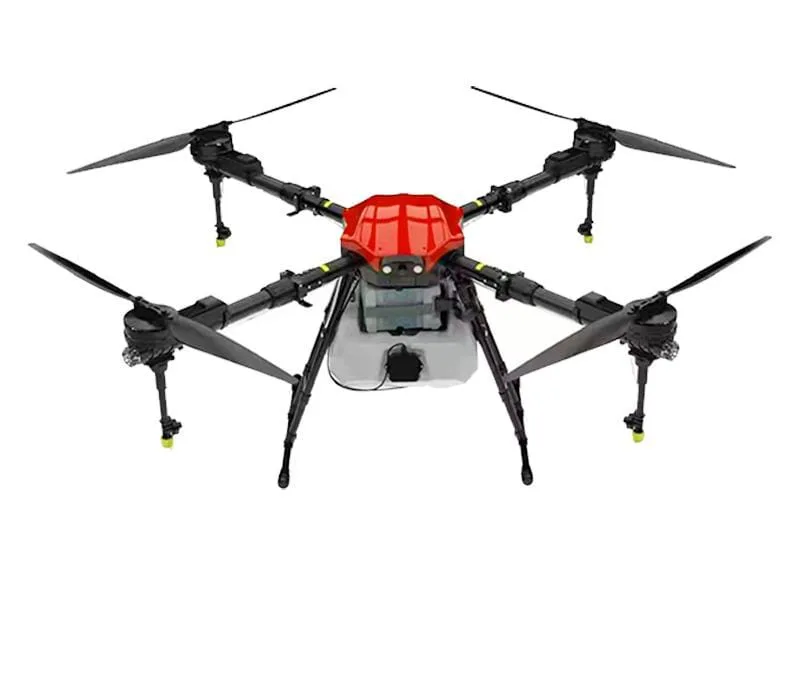
Pressure (fan) nozzles are simple and easy to replace. Centrifugal nozzles allow droplet size to be adjusted, which helps balance coverage and drift. Whatever the type, you should be able to change droplet size or nozzle tips for different products and conditions.
3. Flight control and stability
Terrain following
Radar or sensors keep the drone at a constant height above the crop on slopes, bunds and uneven canopies. Without it, spray height varies and coverage suffers.
Obstacle sensing
Forward and rear sensing helps avoid trees, poles and wires. It is a safety backup, not a replacement for a careful field survey.
Positioning (GNSS and RTK)
Standard GNSS is fine for most open fields. RTK adds centimetre-level accuracy for precise, repeatable routes in orchards, narrow plots and contract work.
4–7. Batteries, app, durability and support
- Batteries: capacity, charging time and how many sets keep the drone flying continuously
- App: easy field mapping, clear settings and a language your pilot understands
- Durability: dust and water resistance, foldable arms, easy cleaning after chemical use
- Support: service centre distance, spare parts stock and training
Which drone suits which crop?
| Crop type | Most important features |
|---|---|
| Paddy and wheat (open fields) | Even flow control, wide swath, efficient batteries |
| Cotton and sugarcane (tall, dense) | Strong downwash, terrain following, stable height |
| Orchards and vineyards | Precise routes (RTK), obstacle sensing, canopy penetration |
| Vegetables (small, mixed plots) | Compact size, quick set-up, fine droplet control |
How to compare drones in a demo
- Ask for the same field, product and settings for each drone you compare
- Use water-sensitive paper at different heights in the canopy to see coverage
- Time a full cycle: spraying, return, refill and battery swap
- Observe how the drone handles wind and field edges
- Ask the pilot how easy it is to change nozzles and clean the system
Software and data features worth having
Modern spraying drones are as much software as hardware. A good planning app saves time every day and reduces mistakes in the field.
- Quick field boundary mapping by walking, flying or importing a map
- Saved fields, so repeat jobs need no re-mapping
- Resume-from-breakpoint after refills and battery swaps
- Spray logs with area, flow and time for records and billing
- Fleet management if you plan to run more than one drone
Mistakes buyers make when choosing a spraying drone
- Comparing only tank size and advertised acres per hour
- Ignoring how many battery sets are needed for real work
- Not checking whether nozzles and droplet size suit their crops
- Choosing a model with no service centre in their state
- Skipping the field demo and buying from a video
Check certification before features
Whatever features you shortlist, confirm the exact model has a valid type certificate and can be registered on Digital Sky (opens in a new window). An excellent spray system is of no use if the drone cannot be operated legally.
Frequently asked questions
Is RTK necessary for a spraying drone?
Not for every farm. RTK is valuable for precise, repeatable routes in orchards, narrow plots and service businesses. Standard GNSS works for many open fields.
Is a bigger tank always better?
No. A bigger tank means a heavier drone, bigger batteries and harder transport. Choose the tank class that matches your fields and logistics.
Which drone suits which crop?
Open fields need even flow and efficient batteries; tall crops need strong downwash and stable height; orchards need precise routes and obstacle sensing.
Why is terrain following important?
It keeps spray height constant over uneven ground and canopies, which keeps coverage even and reduces drift.
Why does the nozzle type matter?
Nozzles decide droplet size and pattern, which affect coverage, penetration and drift. The right choice depends on the product and conditions.
How do I test spray coverage?
Place water-sensitive paper cards at the top, middle and bottom of the canopy and check droplet density after a pass.
Can I get a quote for a spraying drone?
Yes. Call 8282802150 with your crops, area and terrain, and we will share options and a written quote.
What is downwash and why does it matter?
Downwash is the air pushed down by the rotors. It drives droplets into the canopy, helping coverage on both sides of leaves — especially in dense crops.
Does a spraying drone need different nozzles for herbicides?
Often yes. Herbicide spraying usually needs coarser droplets to limit drift onto nearby crops. Use only herbicides approved for drone application and follow the label.
About this guide
- Written by
- Kisan Drone team, Noida. We work with farmers, FPOs and drone operators on spraying, buying and training questions.
- Reviewed by
- Mohit Singh, Drone Operator — 10 years of drone-spraying experience
- Last updated
How we write
We do not publish invented prices, subsidy amounts, yields or reviews. Rules and schemes are checked against official sources, and anything that depends on your crop, product or location is marked as such. Found an error? Email enquiry@kisandrone.co.in.