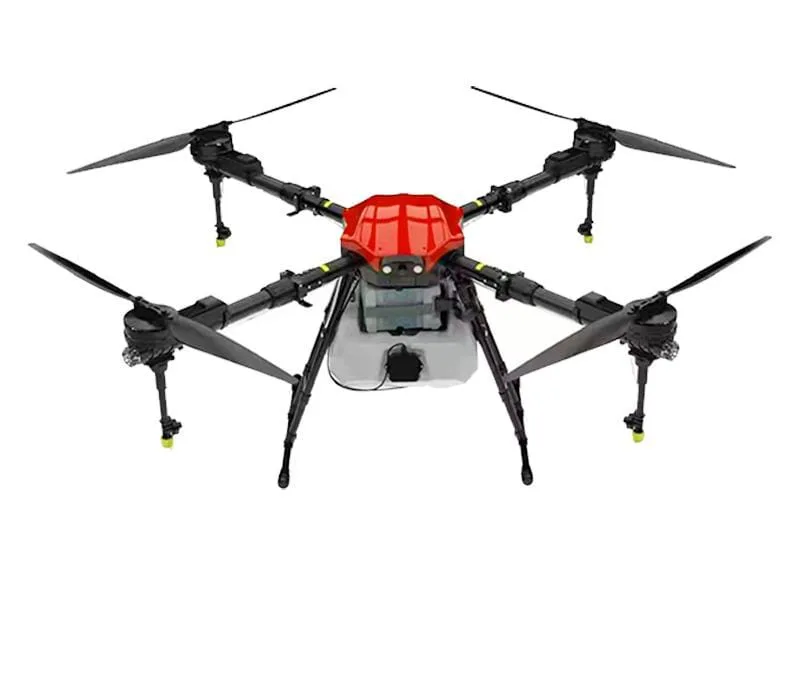
Quick answer
Drones help farmers spray faster on large or hard-to-walk fields, use less water per acre, reduce direct chemical exposure and react quickly to pest outbreaks. They work less well on very small plots surrounded by trees or wires, in strong wind, or with products not approved for drone use. Results depend on correct settings and a trained pilot.
Key takeaways
- Biggest gains: flooded paddy, tall sugarcane and cotton, and urgent outbreak spraying.
- Drones do not replace good agronomy — the right product and timing still matter most.
- Low wind, correct height and the right nozzles decide spray quality.
- Try a hired service first before investing in your own drone.
8 practical benefits of drones in agriculture
1. Speed when it matters
Pest and disease attacks need a quick response. A drone can cover a field far faster than a person with a knapsack sprayer, so the whole crop is treated within the right window.
2. No need to walk into the crop
In flooded paddy, tall sugarcane or dense cotton, walking is slow and damages plants. The drone flies above the canopy, so there is no trampling and no wheel tracks.
3. Lower water use
Drones use a much smaller spray volume per acre than conventional spraying, which helps in areas where carrying water to the field is difficult.
4. Less chemical exposure
The pilot stands at the field edge instead of walking through the spray, reducing direct contact. PPE is still essential while mixing and filling.
5–8. Uniform coverage, records, labour savings and mapping
- GPS-guided flight paths give even coverage with fewer missed strips
- Flight logs record when, where and how much was sprayed
- Less dependence on scarce labour at peak season
- Camera drones create field maps and crop health maps for planning
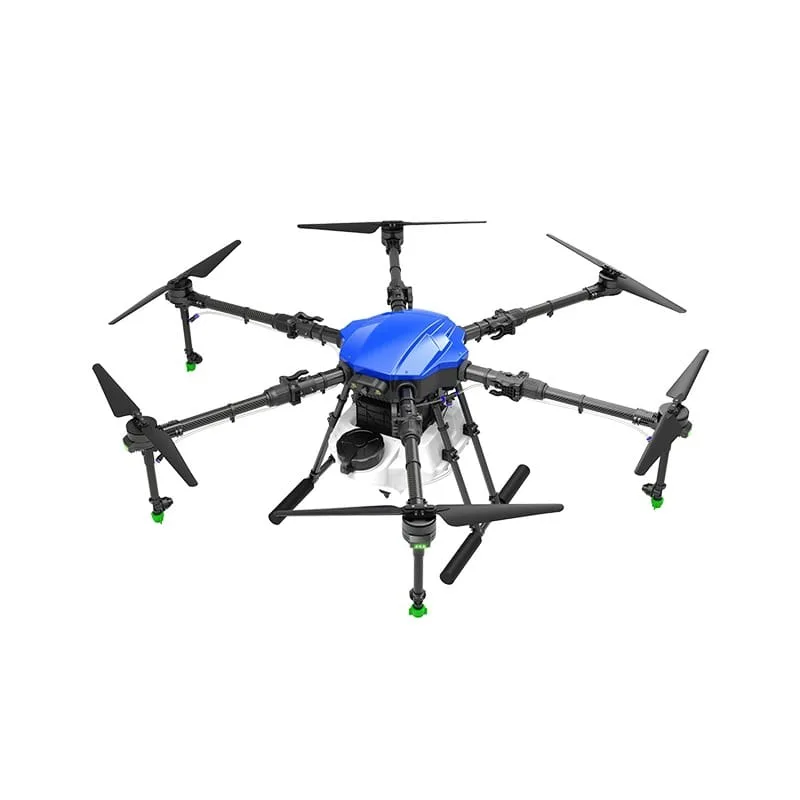
When a farming drone may not be the right choice
- Very small plots surrounded by trees, poles or power lines
- Strong or gusty wind, rain, or very high temperatures that increase drift and evaporation
- Products that are not approved for drone (opens in a new window) application on your crop
- Fields close to houses, schools, water bodies or beehives without proper buffer zones
- Fields in restricted airspace zones where permission has not been obtained
Drone vs traditional spraying at a glance
| Point | Drone spraying | Knapsack / manual spraying |
|---|---|---|
| Speed on large fields | High | Low |
| Access to flooded or tall crops | Easy, from above | Difficult |
| Water volume per acre | Low | High |
| Operator exposure | Lower (stays outside the field) | Higher |
| Small, obstructed plots | Can be difficult | Often easier |
| Skill required | Certified pilot | Basic training |
Is a farming drone worth it for you? A simple test
Before booking or buying, answer three questions honestly. First, how many acres need spraying each season, and how many times? Second, how hard is it to find labour at the time you need to spray? Third, how difficult is it to walk through your crop — is it flooded, tall or dense?
If your area is large, labour is scarce at peak time, or the crop is hard to enter, a drone will likely save you time and effort. If your plot is small, open and easy to walk, compare costs carefully; a hired drone service shared with neighbours often gives the best value.
Checklist for good results
- Identify the pest or deficiency correctly — ask your KVK or agronomist if unsure
- Use a product approved for drone use and follow the label dose
- Spray in calm conditions, usually early morning or late afternoon
- Ask the pilot about height, swath width, speed and nozzle type for your crop
- Inform neighbours and keep people and animals away during spraying
- Keep a record of the date, product and area sprayed
Frequently asked questions
Is drone spraying better than manual spraying?
On large, flooded or tall crops it is usually faster and keeps the operator away from chemicals. On very small or obstructed plots, manual spraying can still be the practical choice.
Does a drone reduce pesticide use?
The dose of the product should follow the label. What drops sharply is the water volume. Even coverage can reduce waste, but the label dose still applies.
Can drones be used in small fields?
Often yes, especially when neighbouring fields are sprayed together. Very small plots with trees or wires around them can be difficult and less economical.
Does drone spraying work as well as traditional spraying?
When the product, dose, nozzles, height and weather are right, drone spraying can give good coverage. Poor settings or windy weather reduce effectiveness with any method.
Is drone spraying safe for bees and the environment?
Risk depends on the product and timing. Avoid spraying during flowering hours when bees are active, keep buffer zones near water and follow the SOP for drone spraying.
What else can a farming drone do besides spraying?
Drones with RGB or multispectral cameras can map fields, measure area and show crop health differences, helping you find problem patches early.
How do I try a drone on my farm?
Book a drone spraying service for one field first. Call or WhatsApp 8282802150 with your crop, area and location.
About this guide
- Written by
- Kisan Drone team, Noida. We work with farmers, FPOs and drone operators on spraying, buying and training questions.
- Reviewed by
- Mohit Singh, Drone Operator — 10 years of drone-spraying experience
- Last updated
How we write
We do not publish invented prices, subsidy amounts, yields or reviews. Rules and schemes are checked against official sources, and anything that depends on your crop, product or location is marked as such. Found an error? Email enquiry@kisandrone.co.in.