Quick answer
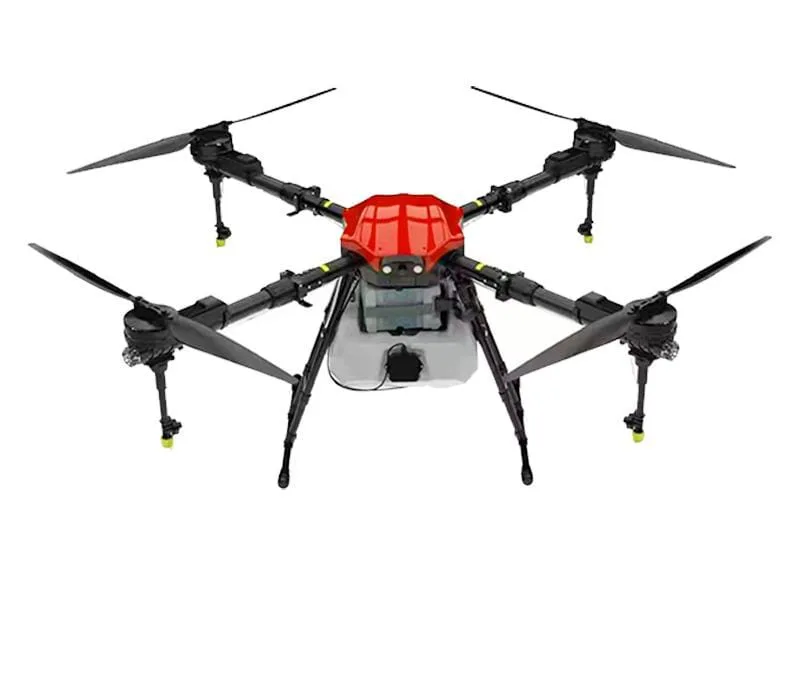
A 10 litre agriculture drone suits small and scattered fields, vegetable plots, hilly terrain and new pilots or service starters. It is lighter, easier to carry and quicker to set up, but needs more frequent refills and battery swaps, so it covers less area per day than 16 or 20 litre drones. Check certification, battery sets and service support before buying.
Key takeaways
- Best for small plots, scattered fields and difficult access.
- Lighter batteries and easier transport on a two-wheeler or small vehicle.
- More refills per acre than larger drones — plan water and batteries.
- A good learning platform for new pilots and small service businesses.
Advantages of a 10 litre drone
Easy to transport
A compact frame with foldable arms fits in a small vehicle. This matters when fields are spread across villages connected by narrow roads.
Quick set-up on small plots
Small plots need many short jobs. A lighter drone with smaller batteries is faster to set up, move and pack, saving time between fields.
Lower running effort
Smaller batteries are easier to handle and charge, and the drone is less demanding to manoeuvre — useful for new pilots building experience.
Limits to keep in mind
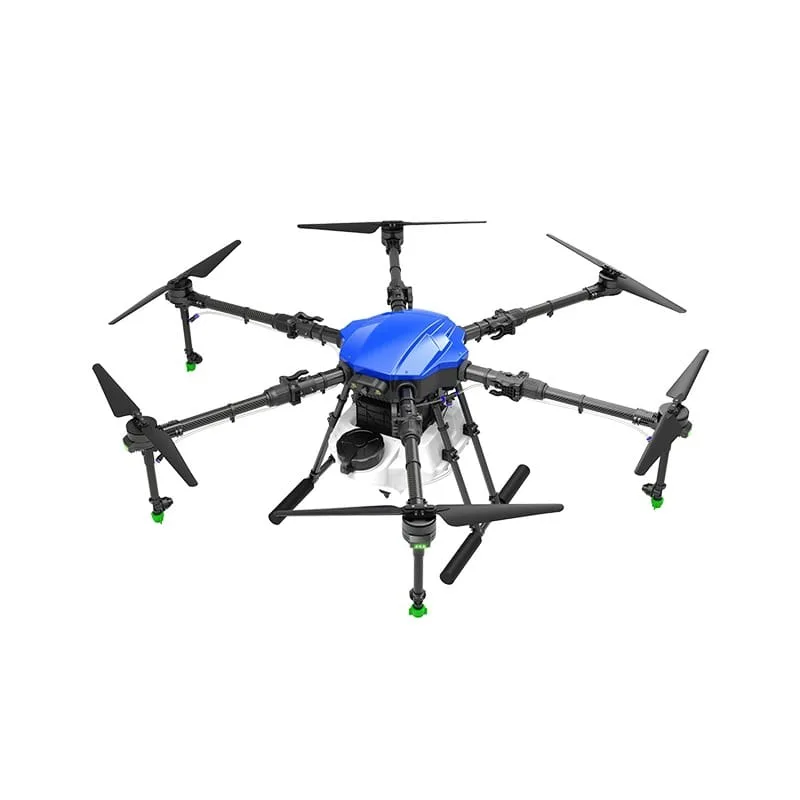
- More refills and battery swaps per acre than larger drones
- Less area covered per day on large, continuous fields
- Narrower swath on many models, meaning more passes
- May not be the most economical choice for a large service business
10 litre vs 16 litre — quick comparison
| Point | 10 litre class | 16 litre class |
|---|---|---|
| Weight and transport | Lighter, easier | Heavier |
| Refills per acre | More | Fewer |
| Best fields | Small, scattered, hilly | Medium to large |
| Ideal buyer | Small service starter, vegetable belts | Growing service business, FPO |
What to check before buying
- DGCA type certificate (opens in a new window) and registration support for the exact model
- Battery sets included and the price of extra sets
- Charging time compared with flight time
- Spray system: nozzle type, flow control and droplet settings
- Spare parts and service availability near you
- Training for your pilot
Who it is right for
A 10 litre drone fits farmers and young entrepreneurs in areas with small landholdings, vegetable belts, terraced fields or plots separated by trees and bunds. It is also a sensible first drone for someone building a spraying service step by step. As demand grows, many operators add a larger drone for big fields and keep the 10 litre drone for small jobs.
Running a small spraying service with a 10 litre drone
Many young entrepreneurs start a drone spraying service with a 10 litre drone because the investment and handling are manageable. The key to making it work is efficient scheduling. Group bookings in the same village, keep batteries charged and water ready, and plan routes so that travel time between fields stays short.
Keep simple records of every job — date, farmer, crop, area, product and payment. After one season these records show exactly how many acres you can handle and whether adding a second drone or a larger one makes sense.
Crops where a 10 litre drone fits well
- Vegetables grown in small, mixed plots
- Pulses and oilseeds on scattered landholdings
- Terraced or hilly fields where heavy drones are harder to handle
- Small orchards and nurseries with careful route planning
Upgrade path as your work grows
A 10 litre drone does not have to be your only drone forever. Many operators keep it for small and difficult plots after adding a larger drone for big fields. Ask the dealer whether batteries, chargers or accessories can be shared across models from the same brand — this can reduce costs when you expand.
Frequently asked questions
Who should buy a 10 litre agriculture drone?
Owners of small or scattered fields, vegetable growers, operators in hilly areas and new service providers starting small.
How many acres can a 10 litre drone spray in a day?
It depends on the spray volume per acre, battery sets, refilling speed, field layout and weather. Ask for a realistic estimate based on your conditions.
Is a 10 litre drone enough for a spraying business?
It can be a good start, especially in small-plot areas. For large fields and high demand, a larger drone may be more economical.
Does a 10 litre drone need a pilot certificate?
Yes. Commercial operation of an agriculture spraying drone requires a Remote Pilot Certificate and a registered, certified drone.
How many battery sets do I need?
For continuous work, usually several sets so one can charge while another flies. The right number depends on charging time and flight time.
What is the price of a 10 litre drone?
Prices depend on the model and package. Call 8282802150 for a written quote.
Is a 10 litre drone easier to learn on?
Its lighter weight and smaller size make it more forgiving for new pilots, but proper certified training is still essential.
Can a 10 litre drone spray tall crops?
Yes, with correct height settings and terrain following, though large blocks of tall crops may be covered faster by larger drones.
Can a 10 litre drone be carried on a motorcycle?
Some compact models with folding arms can be carried carefully, but batteries, water and equipment usually need a small vehicle. Always transport batteries safely.
About this guide
- Written by
- Kisan Drone team, Noida. We work with farmers, FPOs and drone operators on spraying, buying and training questions.
- Reviewed by
- Mohit Singh, Drone Operator — 10 years of drone-spraying experience
- Last updated
How we write
We do not publish invented prices, subsidy amounts, yields or reviews. Rules and schemes are checked against official sources, and anything that depends on your crop, product or location is marked as such. Found an error? Email enquiry@kisandrone.co.in.