Quick answer
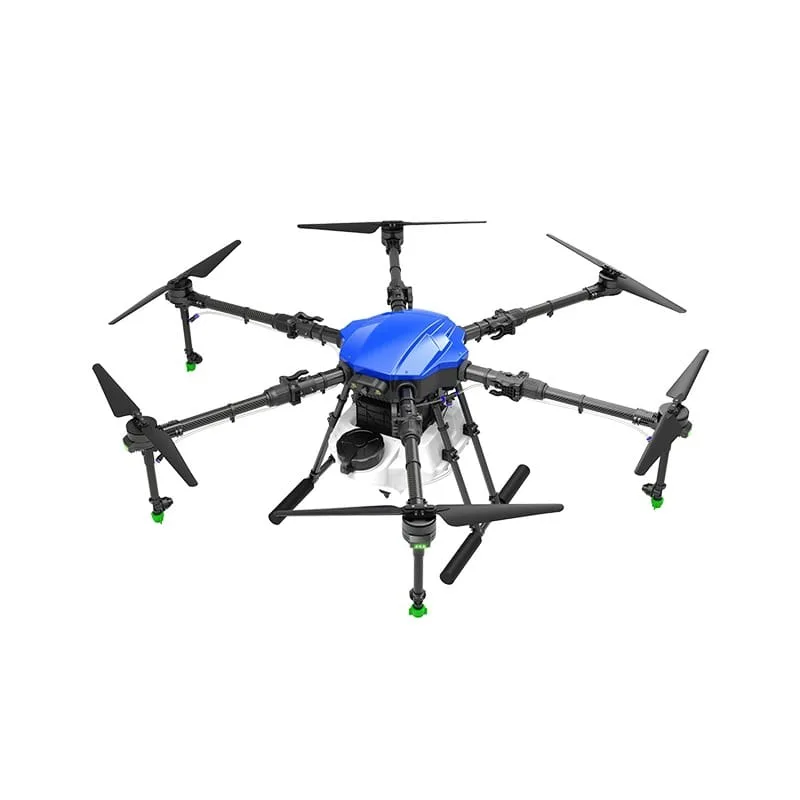
A 16 litre agriculture drone is a balanced choice for medium-to-large farms, FPOs and spraying service providers. It needs fewer refills than a 10 litre drone while remaining easier to transport and power than a 20 litre drone. Before buying, check certification, battery sets, charging set-up, service support and training.
Key takeaways
- Good balance of area per flight, weight and transport.
- Popular with service providers working across varied field sizes.
- Needs a solid charging set-up — several battery sets and often a generator.
- Compare the full package, not just the tank size.
Who a 16 litre drone suits
Medium and large farms
Farmers with larger landholdings who spray several times a season can cover their own fields efficiently without the bulk of a heavy drone.
Drone spraying entrepreneurs
Service providers handle a mix of small and large jobs. A 16 litre drone is versatile enough for both and keeps refill trips manageable.
FPOs and Custom Hiring Centres
Groups serving many members need reliability and steady output across the season. The mid-size class is often a practical fit.
10 vs 16 vs 20 litre at a glance
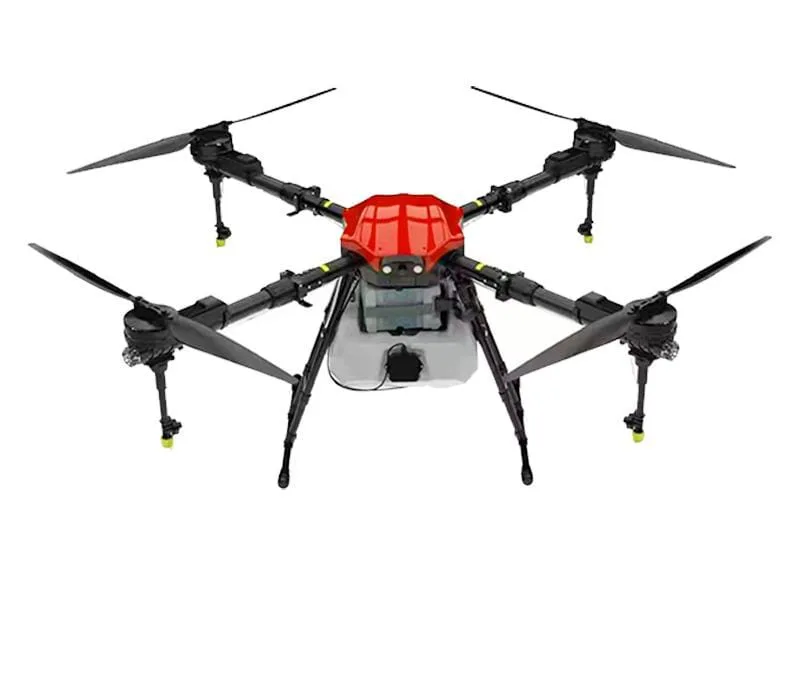
| Point | 10 L | 16 L | 20 L |
|---|---|---|---|
| Area per flight | Lower | Medium | Higher |
| Weight and transport | Easiest | Moderate | Heaviest |
| Battery and charging demand | Lower | Medium | Higher |
| Best for | Small plots | Mixed workloads | Large blocks |
Before buying a 16 litre drone
- Confirm the DGCA type certificate (opens in a new window) for the exact model
- Check how many battery sets come with the package
- Plan your charging: fast charger and generator at the field
- Check transport — vehicle size and loading
- Ask about spare parts stock and repair times in season
- Confirm pilot training and app support
Planning a spraying business with a 16 litre drone
If you plan to offer spraying to other farmers, think beyond the drone. You will need a certified pilot, a helper for mixing and refilling, a vehicle, a water supply plan, a generator and enough battery sets. Demand also matters: talk to farmers and FPOs in your area to estimate how many acres you can realistically book each season.
Many successful operators start by doing group bookings in their own village, building trust through good results, and then expanding to neighbouring areas.
Scheme support
Some schemes have supported drone purchases by FPOs, CHCs and other eligible groups. Check eligibility, application timing and any list of approved models with official sources before ordering. See our guide on buying a drone with subsidy for the correct order of steps.
A typical working day with a 16 litre drone
A productive day starts before sunrise. The crew loads the drone, charged batteries, generator, water and the farmer's product, and reaches the first field while the wind is calm. The pilot checks the field, sets the route and starts spraying while the helper mixes the next tank and manages battery charging.
Through the morning, the team moves from field to field in a planned order, pausing when wind rises in the afternoon heat. Spraying often resumes in the late afternoon. At the end of the day the drone is cleaned, batteries are cooled and charged, and records are updated.
This rhythm shows why a mid-size drone suits service work: enough capacity to keep moving, yet light enough to move quickly between many farmers' fields.
Costs to plan for in the first season
Planning these costs before buying helps you set fair service rates and avoid surprises once the season starts.
- Pilot certification and training
- Registration, insurance and paperwork
- Generator, fuel and charging equipment
- Spare propellers, nozzles and pump parts
- Vehicle running costs and crew wages
Frequently asked questions
Who should buy a 16 litre agriculture drone?
Medium-to-large farmers, FPOs, Custom Hiring Centres and service providers handling a mix of field sizes.
Is a 16 litre drone better than a 10 litre drone?
For larger areas it usually needs fewer refills. For small, scattered plots, a lighter 10 litre drone can be more practical.
How many battery sets does a 16 litre drone need?
Enough to keep flying while others charge — usually several sets plus a fast charger and generator.
Can a 16 litre drone spray sugarcane?
Yes, with proper height settings and terrain following. Large sugarcane blocks may also suit a 20 litre drone.
Can I buy a 16 litre drone under a scheme?
Eligible groups may get support under certain schemes. Confirm eligibility and approved models with official sources first.
How do I get a quote?
Call or WhatsApp 8282802150 with your crops, area and plans.
How big a vehicle do I need for a 16 litre drone?
A small pickup or utility vehicle is usually needed to carry the drone, batteries, generator, water and supplies together.
Can one pilot run a 16 litre drone alone?
It is possible but slow. A helper for mixing, refilling and battery management makes the work safer and much faster.
Is a 16 litre drone good for paddy and wheat?
Yes. Open paddy and wheat fields are well suited to a mid-size drone with even flow control and a sensible swath width.
What warranty should I expect on a 16 litre drone?
Terms vary by manufacturer. Ask what is covered — frame, motors, electronics, batteries — for how long, and what is excluded.
About this guide
- Written by
- Kisan Drone team, Noida. We work with farmers, FPOs and drone operators on spraying, buying and training questions.
- Reviewed by
- Mohit Singh, Drone Operator — 10 years of drone-spraying experience
- Last updated
How we write
We do not publish invented prices, subsidy amounts, yields or reviews. Rules and schemes are checked against official sources, and anything that depends on your crop, product or location is marked as such. Found an error? Email enquiry@kisandrone.co.in.