Quick answer
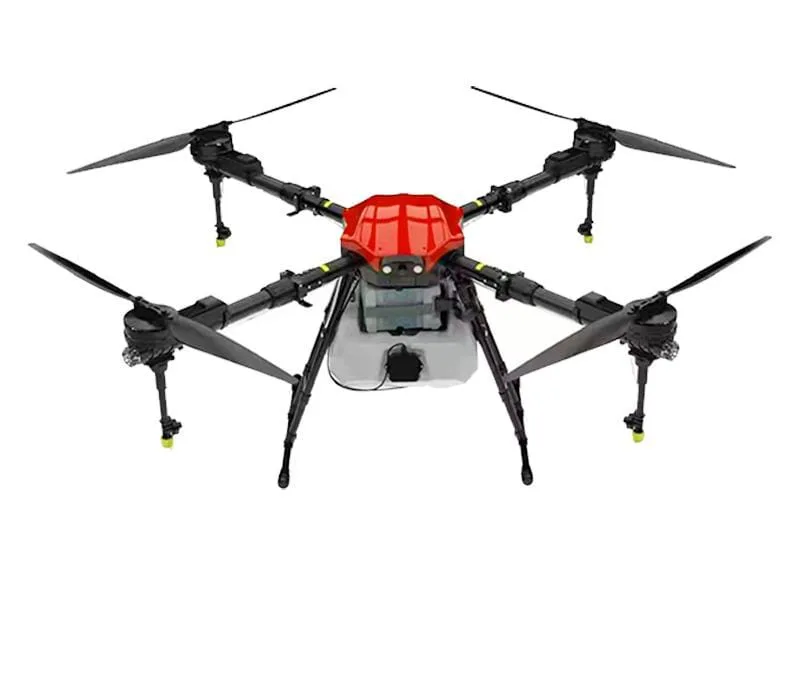
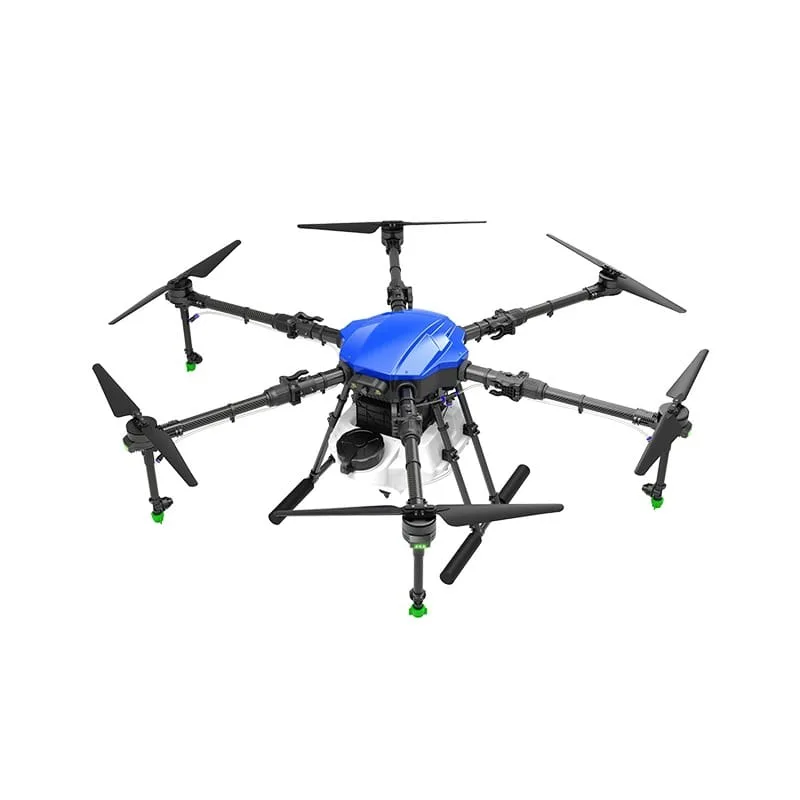
A 20 litre agriculture drone suits large, continuous fields and heavy service workloads, because it carries more spray per flight and needs fewer refills. It also needs bigger batteries, more charging power (often a generator), a larger vehicle and an experienced pilot. It is less practical for small, scattered or obstructed plots.
Key takeaways
- Highest area per flight among common classes — fewer refill trips.
- Requires strong charging and power planning at the field.
- Heavier to transport and handle; plan vehicle and crew.
- Best value only when there is enough large-field work.
Where a 20 litre drone is useful
Higher requirements too
Power and batteries
Larger batteries take more power to charge. Plan a fast charger, a generator of suitable capacity and enough battery sets to avoid waiting.
Transport and crew
The drone, batteries, generator and water tanks need a proper vehicle. A helper for mixing and refilling keeps the drone working.
Pilot experience
A heavier drone carries more momentum. Experienced pilots, careful field surveys and safety margins near obstacles are essential.
When a 20 litre drone may not fit
- Small or scattered plots where set-up time dominates
- Fields with many trees, poles or wires
- Areas without vehicle access close to the field
- Owners who cannot keep the drone busy enough to justify the cost
Planning checklist for large-field operations
| Item | Plan |
|---|---|
| Battery sets | Enough to cover charging time continuously |
| Generator | Capacity matched to charger requirements |
| Water | Tanker or nearby source; clean, filtered water |
| Crew | Certified pilot plus helper for mixing and logistics |
| Spares | Propellers, nozzles, pump parts and a spare arm |
| Bookings | Group bookings by crop and stage to minimise travel |
Making the investment pay off
A larger drone earns its cost only when it works enough acres. Before buying, estimate realistic seasonal demand in your area, how many working days the weather allows and how you will manage peak periods. Some operators run a 20 litre drone for big blocks alongside a smaller drone for small plots, so both are used efficiently.
Safety with heavier drones
A loaded 20 litre drone is a heavy aircraft with fast-spinning propellers. Safety margins must be larger than with small drones.
- Keep people, children and animals well away from take-off and landing
- Survey for wires, poles and trees before every job
- Never fly over people, roads or houses
- Check propellers, arms and batteries before each flight
- Stop work if wind gusts increase or visibility drops
Who should not buy a 20 litre drone yet
If you are new to drones, do not yet have steady demand or work mostly on small plots, start with a hired service or a smaller drone. Building experience and a customer base first reduces risk. Once demand for large-field work is clear, a 20 litre drone can be added to grow your capacity.
Large-field crops and planning tips
On large sugarcane and paddy blocks, divide the area into planned sections that match one tank load. Place the refilling point centrally so the drone's return trips are short. Keep a water tanker and premixing drums ready so the helper can refill quickly. These simple logistics often decide how many acres you finish in a day more than the drone's tank size.
Certification for larger drones
Larger drones carry more weight and risk, so make sure the exact 20 litre model you choose has a valid type certificate (opens in a new window) and that your pilot's training covers the drone's category. Ask the seller to show both before you pay.
Frequently asked questions
Who should buy a 20 litre agriculture drone?
Large farms, FPOs and service providers with large, continuous fields and enough seasonal demand to keep it busy.
Is a 20 litre drone good for small fields?
Usually not. Set-up time and handling make a lighter drone more practical for small or scattered plots.
Do I need a generator for a 20 litre drone?
Usually yes, to charge large batteries at the field. Match generator capacity to the charger's requirement.
Is a 20 litre drone harder to fly?
It is heavier and needs more care near obstacles. A certified, experienced pilot is important.
Is a 20 litre drone suitable for sugarcane?
Yes, large sugarcane blocks are one of its best uses, with correct height settings and terrain following.
How do I get a price for a 20 litre drone?
Call 8282802150 with your crops, area and plans for a written quote.
Does a 20 litre drone need a different pilot certificate?
The required Remote Pilot Certificate depends on the drone's category under the rules. Confirm with your RPTO that your training covers the class of drone you will fly.
Is a 20 litre drone worth it for an FPO?
It can be, if the FPO has large, continuous fields and enough members to keep it busy. Otherwise a mid-size drone may be more practical.
How do I reduce downtime with a 20 litre drone?
Keep enough charged batteries, a properly sized generator, premixed spray and a central refill point, and carry essential spare parts in the vehicle.
Can a 20 litre drone spread granules?
Many larger drones accept a spreader attachment. Check whether your chosen model supports it and test with your granule type.
About this guide
- Written by
- Kisan Drone team, Noida. We work with farmers, FPOs and drone operators on spraying, buying and training questions.
- Reviewed by
- Mohit Singh, Drone Operator — 10 years of drone-spraying experience
- Last updated
How we write
We do not publish invented prices, subsidy amounts, yields or reviews. Rules and schemes are checked against official sources, and anything that depends on your crop, product or location is marked as such. Found an error? Email enquiry@kisandrone.co.in.