Getting started
How Does a Kisan Drone Work? A Simple Guide for First-Time Farmers
How a kisan drone works step by step — parts, flight planning, spraying, safety and rules — in plain language for farmers trying drones for the first time.
Published: Updated: 7 min read
Quick answer
A kisan drone works by flying a GPS-planned route a few metres above the crop while a pump sends diluted spray from its tank to nozzles under the arms. The rotors' downwash pushes droplets into the canopy. A certified pilot plans the field in an app, sets height, speed and spray rate, and monitors the flight from the field edge.
If you have seen a drone spraying a neighbour's field and wondered how it actually works, this guide is for you. A kisan drone is a remotely piloted aircraft built for farm work. It is used most for spraying, but it also helps with crop monitoring and field mapping. Below, we explain the parts, the steps of a spraying job and what you should know as a first-time user.
The main parts of a kisan drone
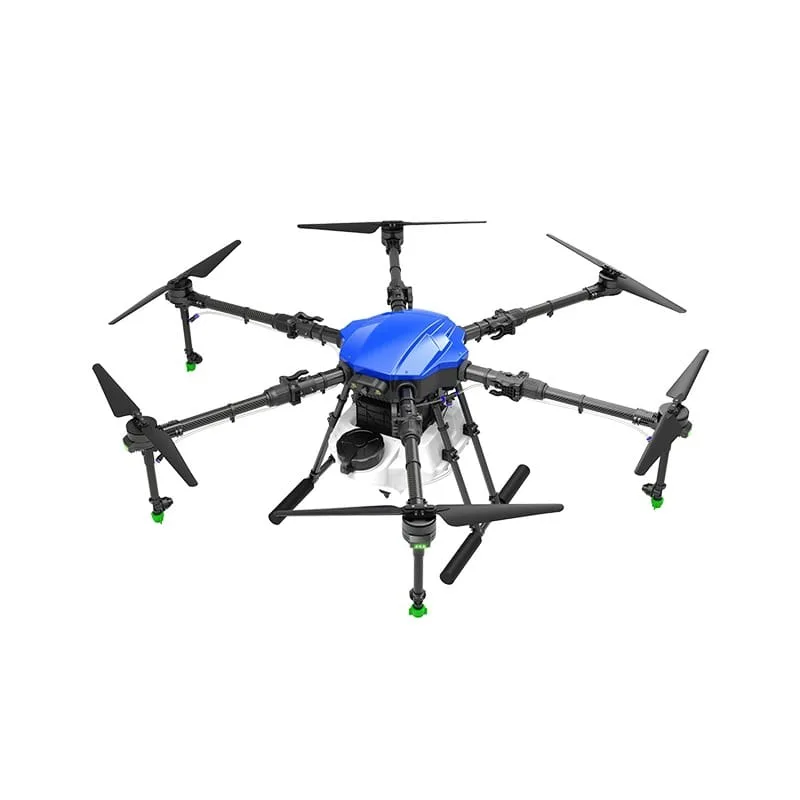
- Frame and arms: usually four, six or eight arms, often foldable for transport
- Motors and propellers: create lift and the downwash that pushes spray into the crop
- Tank: holds the diluted spray mix — common classes are 10, 16 and 20 litres
- Pump and nozzles: send the liquid out at a controlled rate and droplet size
- Flight controller and GPS: keep the drone stable and on its planned route
- Sensors: radar or cameras for terrain following and obstacle sensing
- Batteries: smart lithium batteries that power each flight
- Remote controller and app: used by the pilot to plan and monitor the job
Three main types of agriculture drones
- Spraying drone: with a tank, pump and nozzles that spray the solution onto the crop
- Mapping drone: takes photos with a camera to create an accurate field map
- Monitoring drone: creates crop health maps with a multispectral or RGB camera
How a spraying job works, step by step
1. Field inspection
The pilot first walks the edge of the field to check its size and shape, power lines, trees, houses, water bodies and a safe spot for take-off and landing. They also check the airspace zone on the Digital Sky (opens in a new window) map.
2. Mission planning
The field boundary is marked in the app — by walking it, flying it or using a map. The pilot sets flight height, speed, swath width and spray rate according to the crop and product. Obstacles are marked so the drone avoids them.
3. Mixing and filling
The approved product is mixed with clean water according to the label, wearing gloves, a mask and goggles. Because drones use much less water per acre than knapsack sprayers, the mix is more concentrated and must be measured accurately.
4. Flight and spraying
The drone takes off and flies parallel rows over the field. The pump sends liquid to the nozzles, and the rotor downwash pushes droplets into the canopy. The pilot watches the drone and the app the whole time, ready to pause if wind rises or someone enters the field.
5. Refill and battery swap
When the tank empties or the battery runs low, the drone returns automatically. The helper refills the tank and swaps the battery, and the drone resumes exactly where it stopped.
6. Records and cleaning
After the job, the sprayed area and details are recorded. The tank, pump and nozzles are flushed with clean water away from water sources, and empty containers are disposed of safely.
What makes a good spray job
- Calm weather — early morning or late afternoon is often best
- Correct height and speed for the crop
- Suitable droplet size — finer for coverage, coarser to reduce drift
- Proper overlap between rows so no strips are missed
- Neighbours informed and buffer zones kept near sensitive areas
Rules in simple words
In India, the drone must be of a DGCA type-certified model and registered on Digital Sky. The pilot needs a Remote Pilot Certificate from a DGCA-authorised training organisation. Spraying should follow the government SOP for drone application of pesticides and nutrients. If you hire a service, the operator takes care of these requirements.
Buy or hire a service?
For most small and medium farmers, hiring a drone spraying service is the easiest way to start — you pay only for the area sprayed. For FPOs, Custom Hiring Centres or entrepreneurs starting a drone service, buying a drone can make sense when there is enough work through the season.
Want to see a drone at work on your own field? Call or WhatsApp 8282802150 with your crop, area and location.
Frequently asked questions
How does a kisan drone fly over a field?
The operator marks the field boundary in the app, then the drone flies in set rows using GPS. The operator monitors it the whole time and can take manual control when needed.
How high above the crop does the drone fly?
The operator sets the height based on the crop, drone model and product — usually a few metres above the canopy — so spraying is even and drift stays low.
How much solution can be sprayed in one go?
It depends on the drone's tank class, such as 10, 16 or 20 litres. When the tank is empty, the drone returns to be refilled and resumes where it stopped.
Who can fly a kisan drone?
A person with a Remote Pilot Certificate from a DGCA-authorised institute, flying a registered drone of a certified type.
Can small farmers use kisan drones too?
Yes, by hiring a drone spraying service. There is no need to buy a drone.
What happens if the battery runs low mid-flight?
The drone warns the pilot and returns to the take-off point automatically. After a battery swap, it continues from the point where it stopped.
Does the drone work at night?
Agricultural spraying is normally done in daylight for safety and visibility. Follow the rules and the operator's safety procedures.
About this guide
- Written by
- Kisan Drone team, Noida. We work with farmers, FPOs and drone operators on spraying, buying and training questions.
- Reviewed by
- Mohit Singh, Drone Operator — 10 years of drone-spraying experience
- Last updated
How we write
We do not publish invented prices, subsidy amounts, yields or reviews. Rules and schemes are checked against official sources, and anything that depends on your crop, product or location is marked as such. Found an error? Email enquiry@kisandrone.co.in.